kessler · independent space-traffic audit
KesslerEvery active satellite, screened against every other, every day.
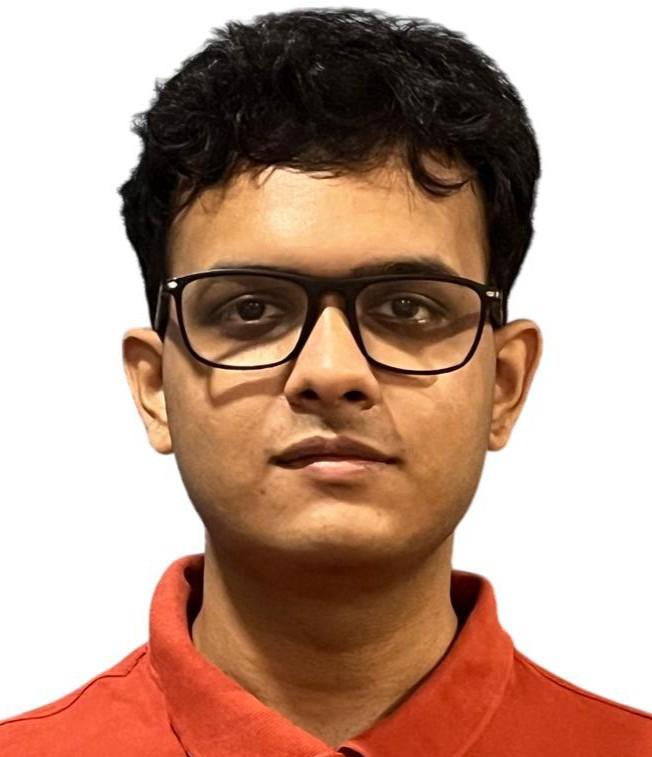 Built and run by Sankur KunduOpen source · running daily on GitHub Actions since October 2026
Operators report how often their satellites dodge each other, and nobody outside can check those numbers. kessler is an open-source auditor built to check them from public data: a GPU orbit propagator, all-vs-all collision screening and collision probability, each validated against the reference.
Closest approaches, next 24 hours
From public orbits accurate to about a kilometre: screening results, not predictions of collisions. The worst-case probability is Alfano's maximum for a 10 m combined radius, as CelesTrak's SOCRATES reports it. Select a row to see both orbits on the globe.
| # | Objects | Distance | Speed | Time (UTC) | Worst-case P |
|---|
Trust, but verify
Low Earth orbit is the busiest it has ever been, and the only collision-avoidance numbers anyone sees are the ones operators publish about themselves.
Starlink satellites maneuver automatically whenever the probability of a collision passes 3 in 10 million. Nobody outside SpaceX can check how often that happens.
kessler is building the tools to do it from public data: screen every pair, compute the probabilities, and detect maneuvers in public orbit histories, then compare with what operators report to their regulator.
The whole sky on a free GPU
One C++ propagator compiled for CPU and CUDA, and a screening method that provably misses nothing. Measured on Kaggle's free Tesla T4.
Checked against the reference
Every component is tested against an independent implementation, and the tests run on every push.
The audit of Starlink's maneuver reports and the results of the full-catalogue run use Space-Track.org data, whose user agreement requires approval before analyses are published. Approval has been requested from the 18th Space Defense Squadron; until then the results stay private and the code and method stay public, so anyone with their own access can reproduce them. Method and code.
An open, independent check
Built so that anyone, not only operators and governments, can see the traffic in orbit and verify what is reported about it.
Every pair, every day, in public
A daily screening of the whole active catalogue, including the Starlink–Starlink pairs that CelesTrak's SOCRATES leaves out, published as a live globe and table.
GPU propagation and screening
SGP4 at 125.7 million states a second on a free GPU, and a grid-based all-vs-all screen proven against brute force, with GPU results identical to CPU.
Collision probability to NASA's standard
Foster's 2D probability from standard Conjunction Data Messages, matching NASA CARA to 1.6e-8, and a Monte Carlo for the slow encounters where 2D fails, agreeing with CARA's on all 53 test cases at 15–19× the speed of NASA's library.
A maneuver audit method
Maneuver detection from public orbit histories, tested on debris that cannot maneuver, built to compare with operators' reports to the FCC once publication is approved.
The story in five facts
Free to quote with credit to “Sankur Kundu, kessler”. Facts marked live are recomputed every morning from CelesTrak's public catalogue.
- SpaceX reported 207,152 collision-avoidance maneuvers by Starlink satellites in six months (Dec 2025 – May 2026); nobody outside SpaceX can verify the figure today.
- The latest daily screening is loading…
- An open-source program screens every active satellite against every other for a full day in 16.4 seconds on a free cloud GPU.
- Its collision probabilities agree with NASA's own Monte Carlo on all 53 of NASA's test conjunctions, and it computes them 15–19 times faster than NASA's library.
Contact
Sankur Kundu, independent researcher, Bhubaneswar, India. Happy to explain the method or run a check for your story.
@software{kundu2026kessler,
  author = {Kundu, Sankur},
  title  = {kessler: an independent, open-source auditor of space traffic},
  year   = {2026},
  url    = {https://github.com/Shakhtar-Sankur/kessler}
}
Sankur Kundu
ML systems engineer & independent researcher · Bhubaneswar, India
Builds GPU and distributed systems, and uses them on public problems. Also the author of lipi, a tokenizer that needs fewer tokens than GPT-4o's and Gemini's in 23 of 24 Indian languages; Babelguard, an open early-warning system for scams across languages; and ratchet, RL post-training from scratch. Pull requests to PyTorch, vLLM and Meta's ExecuTorch, the last approved by two maintainers.