Waggle shows delivery riders what a day on the road really earns.
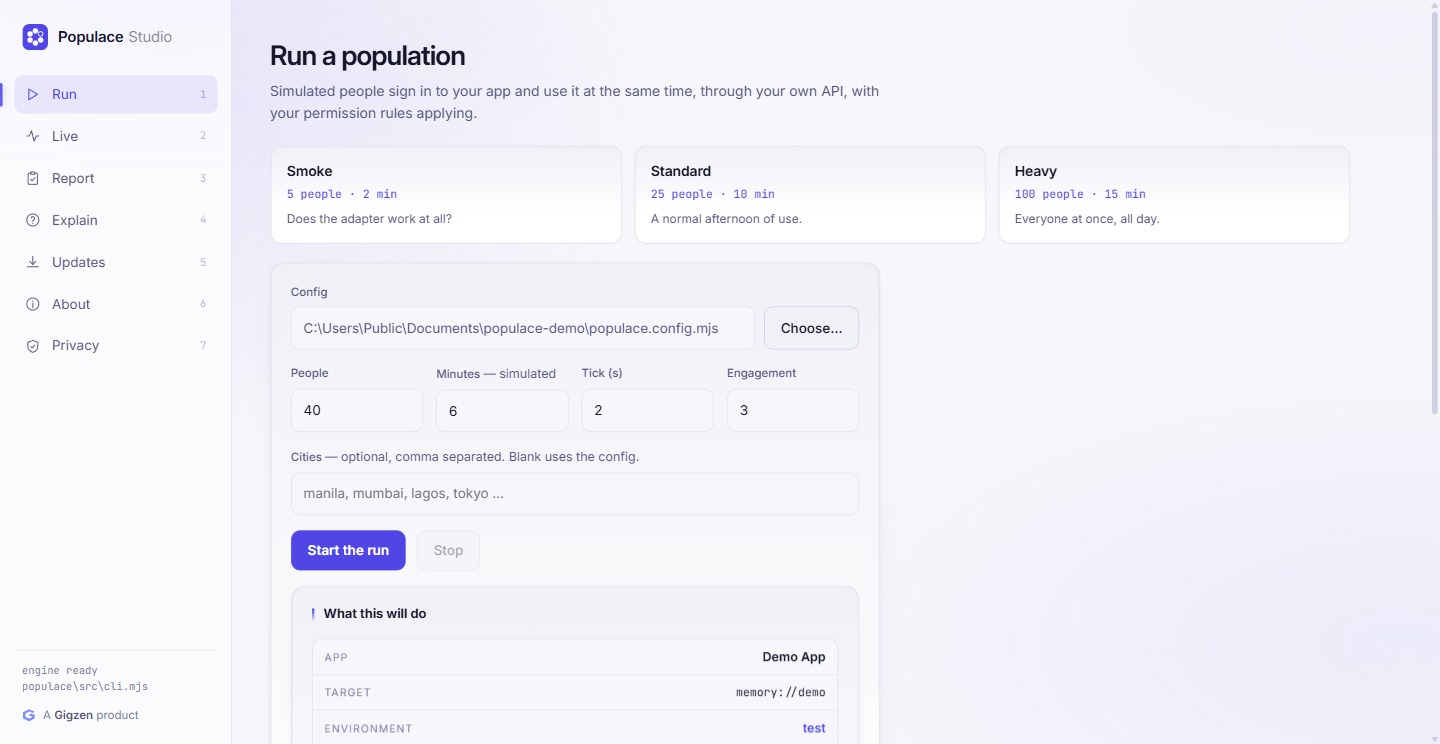
Populace tests apps with a crowd of simulated users, so the bugs that need two
people are found before real people find them.
Gig workers run their day across apps that don't talk to each other. Waggle gives
them one place for it. Populace checks it holds up when many of them use it at once.
Product 01 · Android app
Waggle
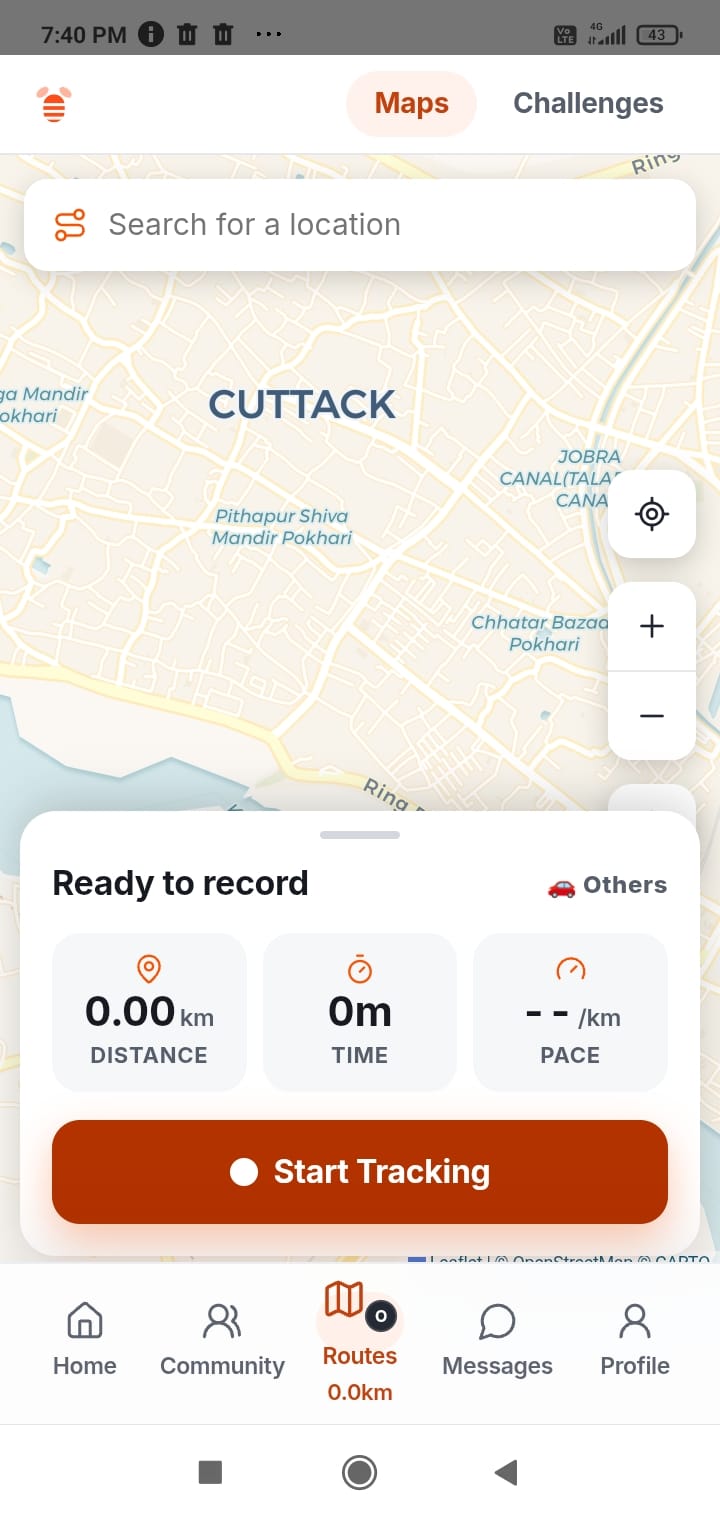
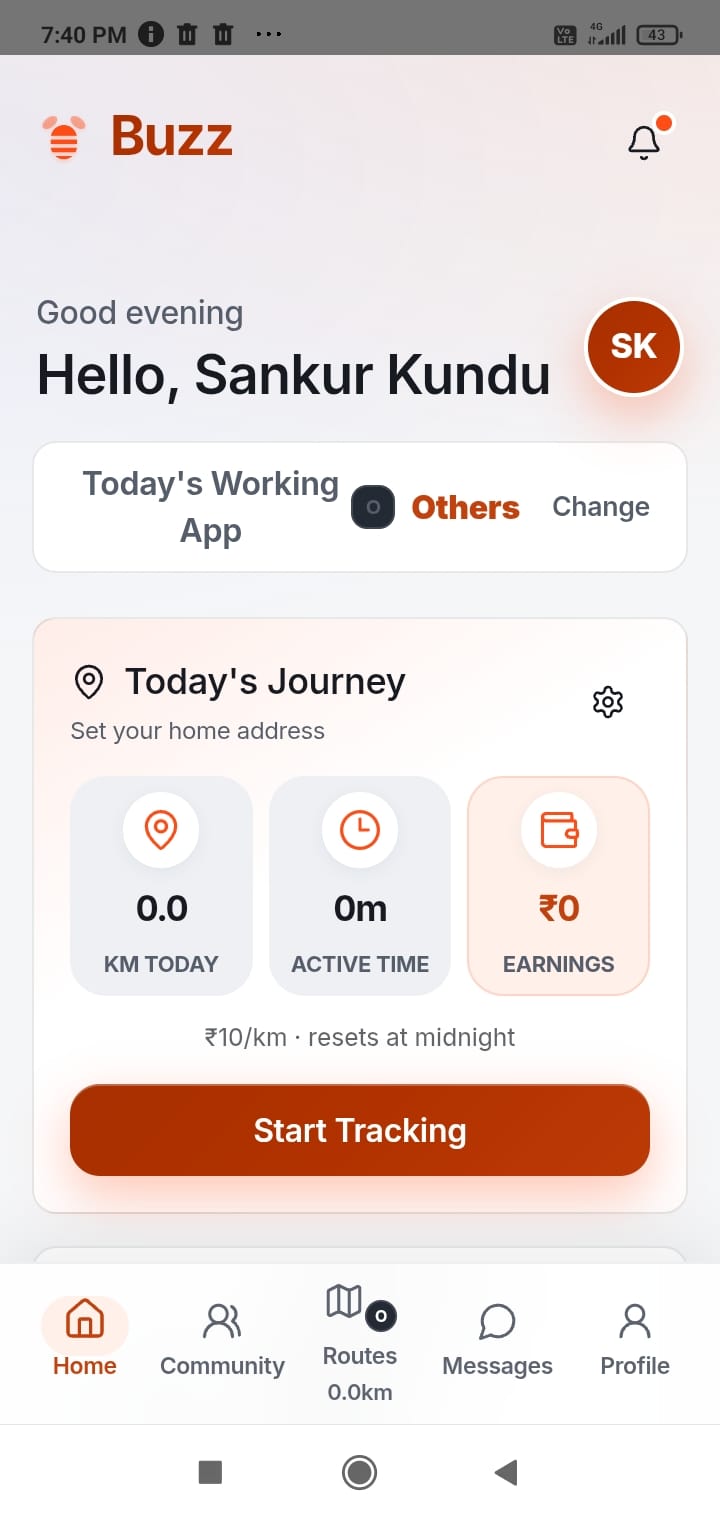
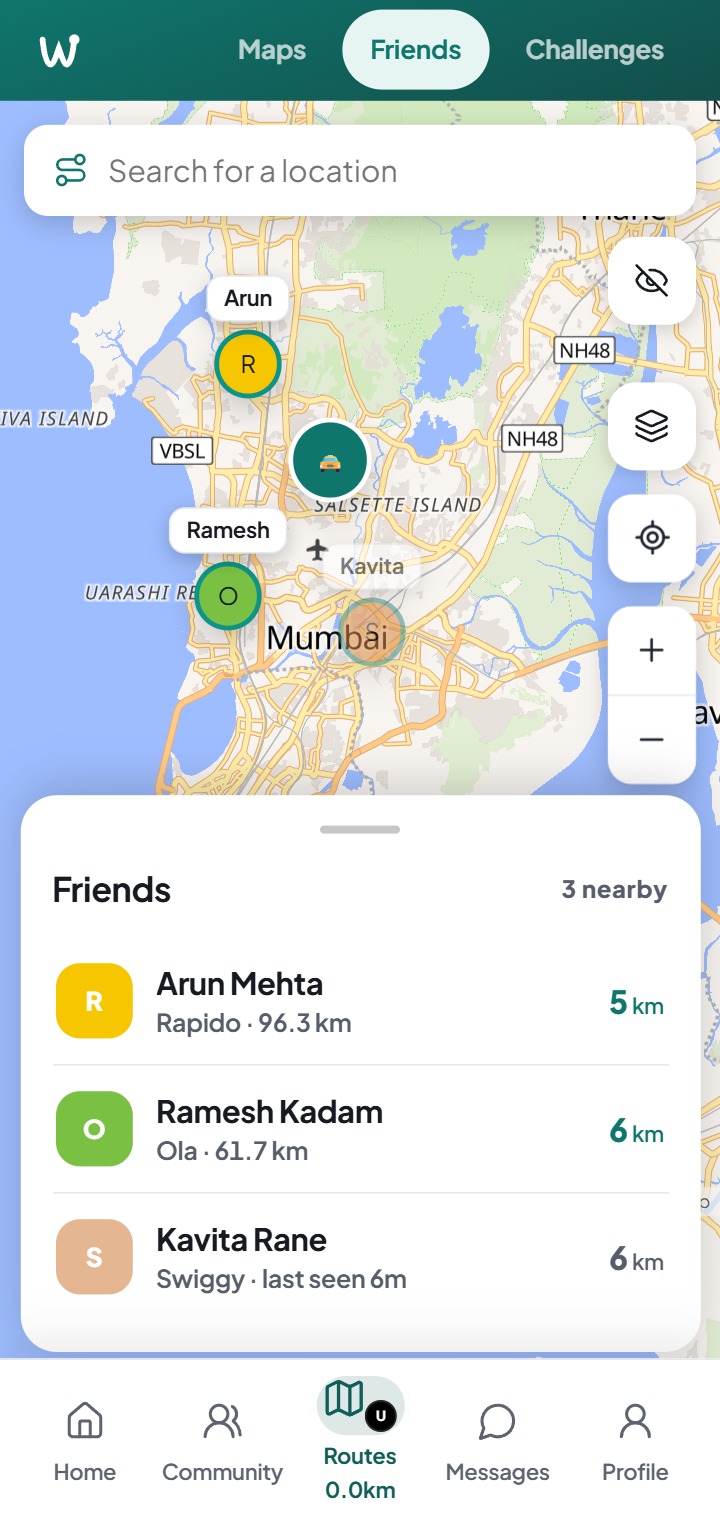
A free app for delivery riders. It counts the distance you actually drive, puts
the riders you know on a map, and gives your streets a feed and group chats.
Built for a mid-range phone on a prepaid plan.
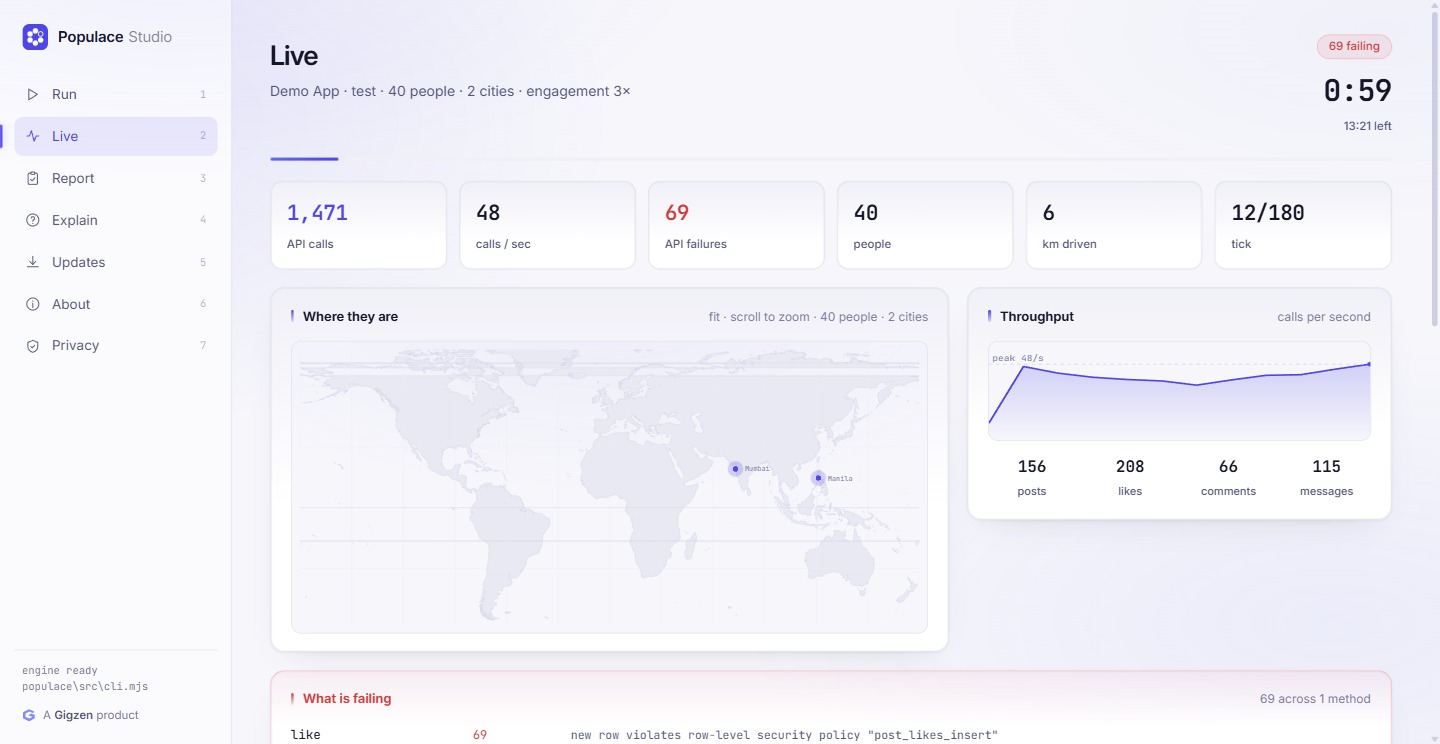
Fills your app with simulated people who sign up, move, post and message through
your real API, all at once. Then it tells you what broke and why. Free and open
source, as a Windows app or a command line.
122 self-testsZero dependenciesWindows app & CLIFree, open source
Riders, drivers and couriers, often on several platforms at once, with a
mid-range phone and a prepaid plan. So Waggle is small, speaks 43 languages and
keeps working when the signal drops.
2
How we test
Bugs that need two people never show up when one person tests. So we built
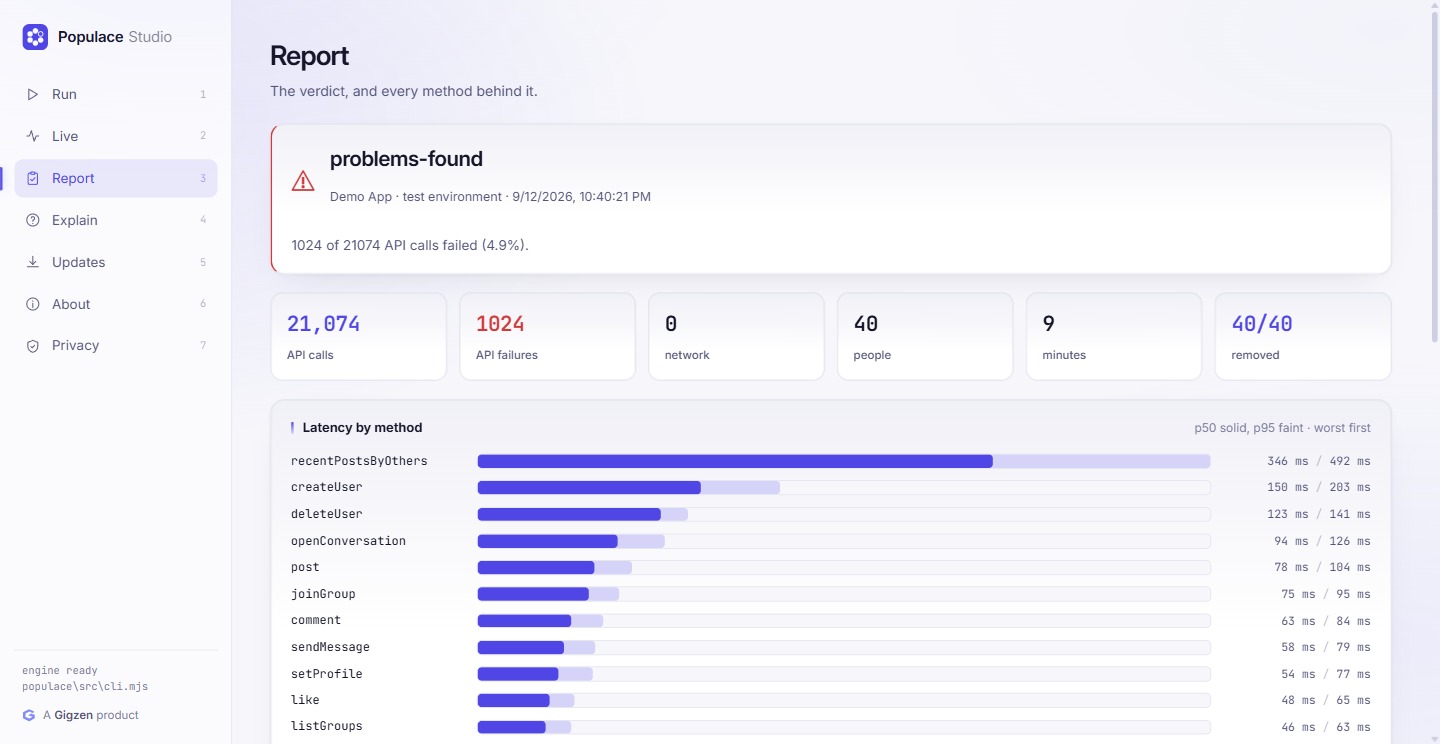
Populace. Its first run found three defects in our own app in three and a half
minutes, one of which broke every new signup. It found two in itself, too.
3
What we publish
Every test run, including the ones that found problems, with its limits written
down. When one of our figures turns out wrong, we correct it in public.
Global
Wherever the work is
A rider in Delhi should get the same app as a rider in London. Waggle speaks 43
languages, right-to-left included, and picks the currency from where you are.
Promises
What we stand behind
Three promises, each backed by how the software is built rather than by a policy page.
Free for riders
Waggle costs a rider nothing. No ads, no trial, no paid tier.
Why it stays free: we plan to earn from fleets and businesses,
not from the people doing the driving.
Privacy the database enforces
One rider can't read another's data, even if the app asks.
How: the access rules live in the database itself, so a bug in
the app can't widen them.
We publish what failed
Every test run is public, including the ones that found defects in our own work.
How: the test report is corrected with dated notes. It is never
quietly rewritten.
History
So far
A short history, because it is a short history.
Gigzen is founded in Bhubaneswar, Odisha, by two co-founders. Incorporation is in progress.
Populace becomes its own product. Its engine is rewritten to know nothing about any
particular app, so any team can use it.
Populace's first run against a live backend. Six simulated drivers, three and a half
minutes: three defects in our app, two in Populace itself.
Seven runs on a local backend, up to 300 simulated drivers at once. 3.17 million API
calls, zero failures, and all 740 accounts removed afterwards.
Populace Studio ships for Windows, and the engine lands on npm as
@gigzen/populace.
The driver app becomes Waggle, and grows from 16 languages to 43.
Populace runs against a hosted backend for the first time: eight simulated people,
895 API calls, no failures.
Company
Small, on purpose.
Gigzen is a software company in Bhubaneswar. We ship few things, build
our own tools, and say plainly what our software does and doesn't do yet.
There are no product divisions. One of us runs the business, the other runs
engineering, across everything we make.
SD
Snehasis Despande
Founder & Head of Business
Runs partnerships, licensing, and how our products reach the people who need
them, across the whole company.
SK
Sankur Kundu
Co-founder & Founding Engineer
Runs engineering for every product, the infrastructure they share, and the
public record of what was tested and what failed.
Contact
Work with us.
Building something many people use at once, or want help testing it
with Populace? Tell us about it.